


Skip to content
For Claude Code and Codex users

Stop babysitting your coding agents

Agent Clinic is hands-on help for engineers, teams and founders whose agents stall, loop or say “done” when they aren't. We fix the setup in your repo, so the work finishes and you can check it.

Book a free 15-minute call

Free · 15 minutes · Google Meet · English or German

Jackson Ly

Jackson Ly

Lead engineer at a YC-backed startup

1,029

PRs merged in 30 days

All public

GitHub and write-ups

A laptop on a glowing platform, connected to six terminal windows that each carry a green check mark

Checks passed

run outside the agent

Built aroundClaude CodeCodexCLAUDE.md and AGENTS.mdHooksSubagentsMCP serversGit worktreesGoal mode
Why agent setups stall

The agents are capable. The setup decides whether work finishes.

A lot of what goes wrong with Claude Code and Codex comes from the setup around the model: context that grows until the agent forgets, checks the agent writes for itself, and runs without a stop condition. That part is fixable.

97.9%

of the tokens in my busiest month were the model re-reading its context. Context size is a cost lever.

16.7%

of my follow-ups to agents came from the agent falling short. The other five in six were not agent failures.

17 of 26

statements in one post needed correcting by a fresh reviewer, after my writer agents had reported green.

Numbers from my own runs. Read the full write-up

Before and after

From babysitting to checked work

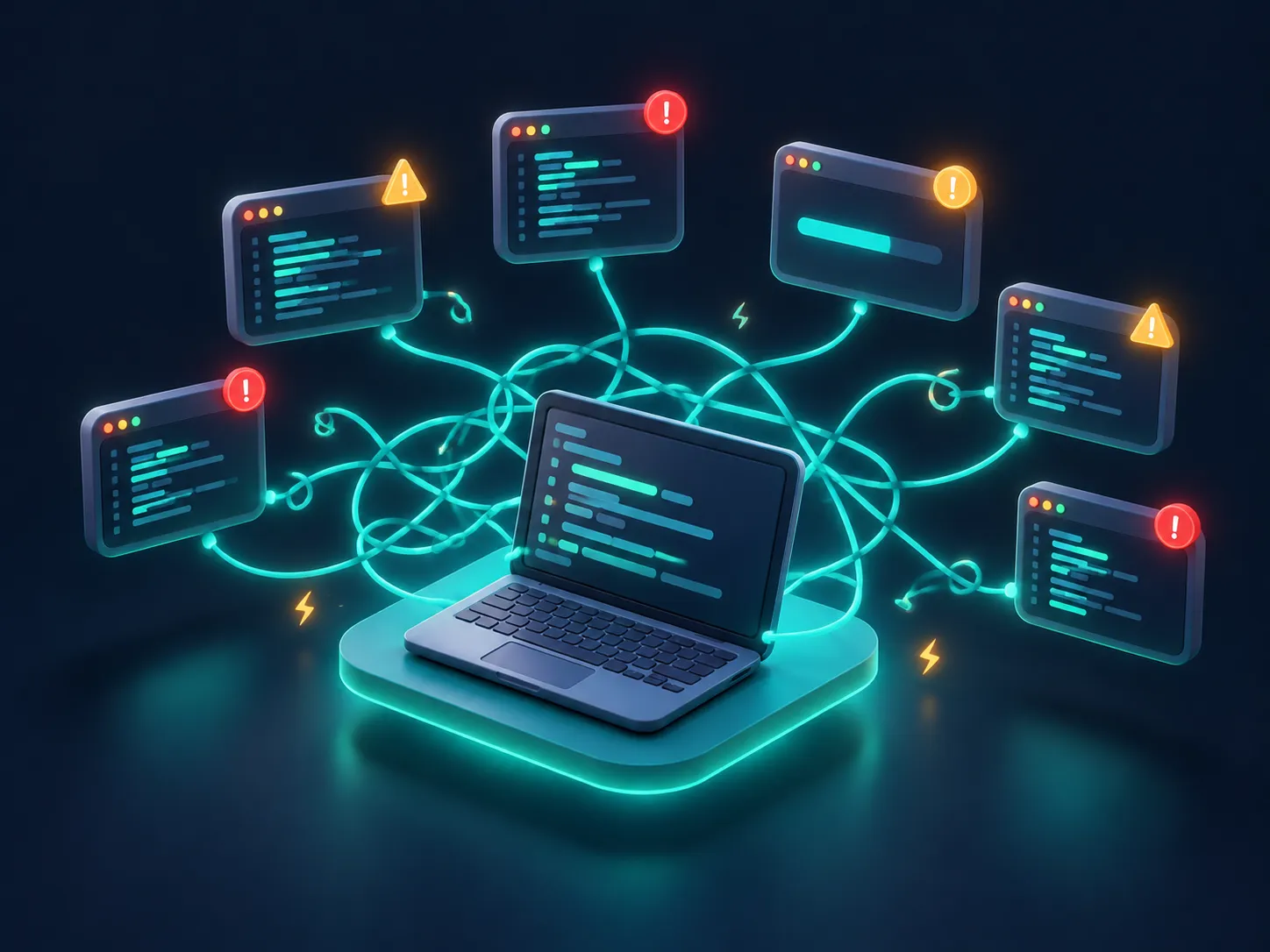
The same laptop tangled in knotted cables, with warning badges on every terminal windowBefore
  • You re-read every diff, because "done" doesn't mean done
  • The limit hits by lunch, and nobody knows where the tokens went
  • Long runs loop at 99% for hours
  • More than two agents at once turns into chaos
  • The rules in CLAUDE.md hold for a day, then drift
The laptop connected to six terminal windows, each with a green check markAfter Agent Clinic
  • Checks the agent didn't write decide what's done
  • You know where the tokens go, and routine work runs on cheaper models
  • Runs have a stop condition, and they end
  • Each agent has its own worktree, task and state in files
  • A short instruction file the agents actually follow
Book a free 15-minute call

Free · 15 minutes · Google Meet · English or German

Free triage

What's going wrong?

Pick the symptom that sounds most like your week. This is the first thing I'd check, before we've even talked.

Agent Clinic triage

It says done, but it isn't

Likely causeThe agent wrote the check it then passed, or nobody defined "done" before the work started.

First thing I'd checkAgree on the check before the task, run it outside the agent's session (a hook or CI), and let a fresh reviewer open the sources.

In a session we look at your actual runs and fix it in your repo.

Book a free call
What we fix together

Six things we fix in your setup

Every session works on your repo and your runs. These are the areas that come up most.

Module 01

A setup that fits your repo

Instruction files short enough to be followed, permissions that stop asking about safe commands, and hooks that run your checks without you.

Typical results

  • A CLAUDE.md or AGENTS.md that stays in sync
  • Permission and hook settings for your project
  • Only the MCP servers you actually need

Module 02

Proof instead of "done"

Checks the agent didn't write itself, and a fresh reviewer that opens the sources. You read results instead of every diff.

Typical results

  • A definition of done agreed before the work
  • Checks that run outside the agent's session
  • A review step you can read in a minute

Module 03

Runs that finish

Briefs sized for one run, and stop conditions that end long runs before they drift for hours.

Typical results

  • A brief template for your kind of tasks
  • Stop conditions and a three-strikes rule
  • Goal-mode runs that end in commits

Module 04

Many agents, no chaos

Worktrees, one task list and state kept in files, so a usage limit or a crash loses nothing.

Typical results

  • One worktree and branch per agent
  • A shared task list every agent reads
  • Runs that survive a limit or a crash

Module 05

Spend you can explain

Where your tokens go (context size, cache, which model does what), and what can safely run cheaper.

Typical results

  • A breakdown of context, cache and model use
  • Routine work routed to cheaper models where it is safe
  • Cost per merged pull request instead of raw tokens

Module 06

A workflow your team shares

One setup in the repo and review rules for agent pull requests, so results stop depending on who ran the agent.

Typical results

  • A shared setup in version control
  • Review rules for agent pull requests
  • Numbers that answer the question from finance

Not sure which of these is yours?

That's what the free call is for.

Book a free 15-minute call
From my own runs

Real runs, real numbers

Agent Clinic is new, so there are no client logos here yet. These are my own runs, each with the fix I'd bring to yours.

Codex goal mode
Situation
A goal-mode run on one of my open-source projects ran for 4.5 days, used 40.8 million tokens and made zero commits.
Goal
Working software, not more notes.
Result
Goal rewritten around running code, the shortcut named, a three-strikes rule added. The next session made 17 commits.
Cost
Situation
Personal recap emails for 534 event attendees, at about 340,000 tokens each: 180 million tokens projected.
Goal
The same quality for less.
Result
Tested a cheaper model on five emails with planted errors, then finished on it: about 110 million in total, at a lower price per token.
Usage limits
Situation
An overnight usage limit stopped 30 of my agents mid-task, from 04:20 to 08:20.
Goal
No lost work.
Result
All 30 resumed where they stopped, because their state lived in files and a shared task list, not in the conversation.
Self-checks
Situation
Writer agents checked their own claims and reported green.
Goal
Statements that hold up.
Result
Fresh reviewers opened every source and corrected 11 of 64, 11 of 44 and 17 of 26 statements.
Book a free 15-minute call

Free · 15 minutes · Google Meet · English or German

Why not a course?

Most help is generic. Yours shouldn't be.

Courses, prompt packs and AI gurus

  • The same slides for everyone
  • Prompt packs and secret tricks
  • No look at your repo or your runs
  • Big claims, little proof
  • "Skill issue" when it doesn't work

Agent Clinic

  • Your repo, your runs, your tools
  • Setups and checks, no magic phrases
  • An engineer who ships with these tools every day
  • Public proof: GitHub, open source, write-ups
  • A straight answer, including "I can't help"
Book a free 15-minute call

Free · 15 minutes · Google Meet · English or German

Jackson Ly leaning on a table in a meeting room
Who you'll talk to

I'm Jackson

I did a business degree first and became an engineer by building. Today I'm lead engineer at a YC-backed startup. On my own products, most of the code is written by coding agents I direct, often several at once and overnight.

In my busiest 30 days, my agents and I merged 1,029 pull requests across 21 repositories. I wrote up what that taught me, including what went wrong, and I build Morndo, an open-source tool for running many agents.

Agent Clinic is for the problems I had to solve myself, usually after a run that went nowhere.

How it works

Three steps to checked work

  1. Step 01

    Book a free 15-minute call

    Pick a time on cal.com. Google Meet, English or German. Bring the run that went nowhere if you have one.

    Pick a time15 min
    09:0009:3011:0013:1514:0016:30
  2. Step 02

    Get a straight answer

    If I can help, you get a short proposal with a clear price. If I can't, I'll say so and point you somewhere better.

    What's going wrong
    What we'd fix first
    A clear price, before any paid work
  3. Step 03

    Fix it in your repo

    We work in your setup, with the tools you already pay for. You keep everything: the config, the checks and the notes.

    ✓ checks passed, run outside the agent
    ✓ stop condition met
    ✓ ready for review
Book a free 15-minute call

Free · 15 minutes · Google Meet · English or German

Questions

The questions you're asking right now

Do you guarantee results?

No. Nobody can honestly promise that. What I can promise: after 15 minutes you know whether I can help, and you get a clear price before any paid work starts.

Isn't this something I should figure out myself?

You can, and plenty of people do. It took me a lot of wasted runs. If fifteen minutes saves you some of that, good. And nobody here gets told "skill issue".

How is this different from a course?

A course teaches the features. We work on your repo and your runs, and you leave with a setup that is already in place.

Claude Code or Codex?

Both. I use them every day and pick per task. I won't try to move you to a different tool.

Do I have to share my code?

No. We can work on a screen share in your environment, so your code stays with you. If you want me working in the repo, we agree on access first.

What does it cost?

The call is free. After it, you get a clear price before any paid work starts.

Do you work with teams?

Yes. The work is the same, plus a setup everyone shares and review rules for agent pull requests.

Will this still hold after the next model release?

The tools change every month. Briefs, checks, stop conditions and state kept in files have carried over every update I've been through.

Agent Clinic

Bring the run that went nowhere

Fifteen minutes is enough to see what's going wrong and whether I can help. If I can't, you still leave with a next step.

Book a free 15-minute call

Free · 15 minutes · Google Meet · English or German